
Who Are the Best Yeast Extract Powder Suppliers in China?

Choosing a reliable Yeast Extract Powder supplier in China takes more than comparing prices or browsing polished product pages. Buyers need to know how the ingredient performs in soups, sauces, seasonings, and other food applications. A fine, tan powder may dissolve quickly in a test beaker, yet behave differently in a salty broth or heated sauce. That gap matters. Supplier claims should be checked against technical data, representative samples, and repeat orders. Look for clear specifications covering flavor profile, moisture, solubility, packaging, and batch identification. Ask how production lots are tested and whether certificates of analysis match the material delivered. Small details count.

China has a wide range of ingredient suppliers, from established manufacturers to trading companies with varied product access. The best fit depends on your recipe, required consistency, order volume, and communication needs—not simply the lowest quote. Ask suppliers about manufacturing capabilities, quality-control procedures, traceability, and sample availability. If a powder must deliver a mild savory note or dissolve in a specific process, share those conditions before requesting a quotation. Their answers can reveal practical experience. Still, a checklist cannot replace testing. One sample is not proof of long-term consistency, and polished documents deserve careful review. Compare samples under realistic conditions, clarify packaging and lead times, and confirm that the supplier can support repeat orders. This guide examines how to assess potential suppliers and what evidence to request before making a decision.
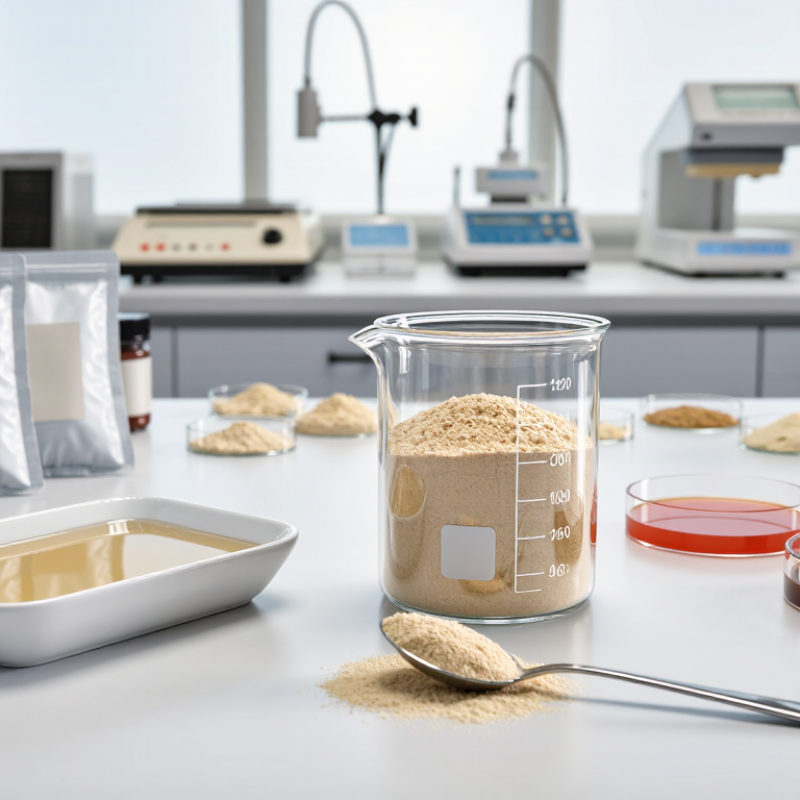
Who Are the Best Yeast Extract Powder Suppliers in China?

What Is Yeast Extract Powder and How Is It Produced?

Yeast extract powder is the water-soluble material released from yeast cells after their proteins and other components are broken down. It contains amino acids, small peptides, nucleotides, minerals, and natural savory compounds. Unlike intact yeast, most insoluble cell-wall material is removed. A peer-reviewed review in the Journal of Food Science and Technology describes autolysis and enzyme-assisted hydrolysis as common production routes; composition varies with yeast strain and processing.

In autolysis, manufacturers control heat, time, and pH to activate enzymes already inside the cells. Some processes add food-grade enzymes to improve breakdown. The mixture is then centrifuged or filtered, concentrated, and spray-dried into a fine powder. It should dissolve readily, with a warm, broth-like aroma—not a harsh, burnt smell. Published technical specifications often assess nitrogen and moisture, but these figures alone cannot predict flavor or solubility. That distinction matters.

Tips: Ask suppliers for a batch-specific certificate of analysis, including moisture, total nitrogen, and microbiological results. Compare samples in the same soup or sauce; small differences in saltiness and color can become obvious after cooking. A supplier’s brochure is not a substitute for a tested sample.

What Are Its Main Uses in Food and Industry?

Yeast extract powder is valued for its savory taste and nutrient content. In food, it can deepen the flavor of soups, sauces, instant noodles, and savory snacks. A small amount may add a rounded, broth-like note without requiring long cooking. Small amounts matter. It also appears in seasoning blends and plant-based foods, where it can support a fuller taste. Its effect depends on the recipe, salt level, and processing conditions, so bench testing is more useful than relying on a fixed dose.

The powder is made from yeast cells and contains varying proportions of amino acids, peptides, and other naturally occurring compounds. These components contribute flavor, while some formulations also provide nutrients for fermentation. In industrial fermentation, yeast extract can serve as a nitrogen and growth-factor source for selected microorganisms. It is used in some culture media and production processes, but it is not a universal substitute for a carefully designed nutrient mix.

For buyers and product developers, practical details matter: solubility, aroma, moisture, particle size, and batch consistency can affect handling and results. Check the product specification and test it in the intended process. Not every batch behaves alike. That variability is easy to underestimate, especially when moving from a small kitchen trial to a larger production line.

Yeast Extract Powder: Typical Composition and Main Uses

Indicative composition ranges reported for yeast extract; actual values vary by product and analytical basis. The ranges are not additive.

In food, yeast extract is commonly used to add savory, umami flavor in soups, sauces, seasonings, snacks, and meat alternatives. In industry, it can provide nutrients in fermentation and microbiological culture media.

How Is China’s Yeast Extract Powder Supplier Market Structured?

China’s yeast extract powder market is better understood as a production chain than a simple supplier list. Upstream producers process molasses or other sugar-rich feedstocks through fermentation, cell separation, enzymatic breakdown, and drying. Integrated manufacturers can control more of this chain, while regional specialists and export traders often focus on particular grades, packaging, or customer service. The difference matters: a fine, pale powder for seasoning may not suit a darker extract used in sauces. Not interchangeable.

Allied Market Research estimated the global yeast extract market at about US$1.7 billion in 2021 and projected roughly US$2.5 billion by 2031. This is a global estimate, not a China supplier count, but it signals demand across food applications. In China, buyers commonly compare savory intensity, solubility, moisture, protein content, and batch consistency. Ask for a recent specification sheet and test samples in the actual recipe; lab results alone can miss changes in aroma after cooking. UN Comtrade classifies yeast extracts under HS 210220, a useful trade-data category, though it does not isolate every powder grade. Supplier descriptions can also be uneven. That makes direct verification essential.

Which Chinese Suppliers Are Notable in the Yeast Extract Powder Sector?

Notable Chinese suppliers in the yeast extract powder sector are best assessed by their production strengths, not by broad “top supplier” claims. Some focus on large-volume fermentation and food manufacturing; others offer finer control over flavor, color, solubility, and salt content. These differences matter when a powder must dissolve evenly in soup bases or deliver a consistent savory note in a seasoning blend.

Grand View Research estimated the global yeast extract market at USD 1.8 billion in 2022 and forecast a 6.7% compound annual growth rate from 2023 to 2030. This is a global estimate, not a ranking of Chinese suppliers. Still, it signals sustained demand from food and beverage manufacturers. For buyers, notable suppliers are those able to provide recent specification sheets, batch-level certificates of analysis, allergen information, and samples that match production-scale performance. A polished sample is not enough.

Tips: Request samples from at least two production batches. Check moisture, color, aroma, solubility, and sodium levels against your target formulation. Ask how specifications are controlled between batches; answers can be vague, so verify them with documents.

How Can Buyers Assess Supplier Quality and Reliability?

A reliable yeast extract powder supplier should provide a batch-specific certificate of analysis, not just a generic specification sheet. Check key values such as moisture, protein, ash, sodium, and amino nitrogen against your application needs. Ask how microbial testing is performed and whether an independent laboratory can verify selected results. A polished brochure is not proof.

Request samples from more than one production lot. Compare color, aroma, solubility, and flavor in your own process, using the same recipe and mixing conditions. Small details matter. A powder that dissolves evenly in a warm test cup may behave differently in a larger tank. Keep sample labels and test notes, so you can compare results rather than rely on memory.

Quality also depends on traceability and dependable communication. Ask whether the supplier can identify the production date, raw-material lot, and storage conditions for each shipment. Check packaging seals, stated shelf life, and how delays or specification changes are reported. A factory visit or documented audit can offer useful evidence, but it cannot replace ongoing checks. No checklist removes every uncertainty; a production trial is still worth the time.

Who Are the Best Yeast Extract Powder Suppliers in China? - How Can Buyers Assess Supplier Quality and Reliability?
Assessment Dimension What to Look For How Buyers Can Verify It Why It Matters
Food-safety management A documented food-safety system appropriate to the manufacturing site and product. Possible schemes include HACCP-based systems, ISO 22000, or FSSC 22000. Request current certificates and confirm the issuing body, validity dates, site address, product or process scope, and any applicable accreditation. Certifications are useful screening evidence, but their scope and current validity should be checked rather than assumed.
Product specification A clear specification covering product identity, form, ingredients, physical and chemical characteristics, storage conditions, and shelf life. Compare the specification with the intended application and destination-market requirements. Clarify test methods and acceptance criteria before ordering. Defined requirements make it easier to confirm that the supplied powder suits the buyer’s process and use.
Batch testing and COA A Certificate of Analysis (COA) linked to the specific production lot, with results for the parameters agreed in the product specification. Check that the COA identifies the lot, test methods, units, and release status. Where appropriate, compare supplier results with testing by an independent laboratory. Lot-specific records support incoming inspection and help buyers investigate quality differences between shipments.
Microbiological and contaminant controls Risk-based testing and control plans suited to the product, manufacturing process, intended use, and applicable regulations. Ask for the relevant test panel, methods, sampling approach, and recent batch records. Confirm limits against the requirements of the target market and application. Applicable requirements vary by market and use, so buyers should not rely on generic limits without checking their own obligations.
Traceability and recall readiness Records that connect incoming materials, production batches, packaging, and dispatches, supported by a documented withdrawal or recall procedure. Ask the supplier to explain its lot-coding system and demonstrate how it traces a finished batch to relevant production and shipment records. Effective traceability helps identify affected lots and supports a timely response to quality or safety concerns.
Allergen and cross-contact management Clear ingredient and allergen information, plus controls for storage, production, cleaning, and labeling where relevant. Request an ingredient statement and allergen declaration. Ask how cross-contact risks are assessed and managed at the manufacturing site. Accurate declarations and suitable controls help buyers assess product suitability and labeling obligations.
Process consistency Documented controls for production parameters, change management, equipment maintenance, and release of finished product. Review quality procedures or audit findings where available. Compare samples and successive lots against the agreed specification. Consistent controls can reduce variation in flavor, color, solubility, and other application-relevant properties.
Packaging and storage Packaging suitable for food contact and the product’s storage and transport conditions, with legible lot identification and handling information. Request packaging details and inspect sample labels. Confirm material suitability, pack sizes, sealing, and storage guidance for the intended route. Appropriate packaging and handling help protect product condition during storage and transport.
Manufacturing capacity and continuity A realistic explanation of available production capacity, planned maintenance, raw-material sourcing, and contingency arrangements. Discuss forecast volumes, order lead times, peak-period constraints, and how the supplier communicates production or supply disruptions. Capacity claims should be assessed against the buyer’s forecast and the supplier’s ability to maintain dependable deliveries.
Export documentation and communication Ability to provide agreed commercial, quality, and shipping documents and to communicate clearly about specifications and order changes. Confirm the document list before purchase and review a sample document set. Agree response contacts, escalation steps, and change-notification expectations. Clear documentation and communication reduce avoidable delays and misunderstandings in cross-border transactions.
Sample and trial performance Samples that can be evaluated against the buyer’s application requirements before a commercial order is placed. Test samples using the intended recipe or process, record results, and agree how production batches will be matched to the approved sample. Application trials provide practical evidence of suitability; a sample alone does not establish long-term batch consistency.
Overall supplier reliability Consistent performance across product quality, documentation, responsiveness, delivery commitments, and corrective actions. Use a documented evaluation checklist, review order and complaint records when available, and periodically reassess performance after supply begins. A structured, evidence-based review is more useful than relying on a single certificate, quotation, or sample.