

China Top Inositol Powder Manufacturers and Suppliers
China has become a major sourcing base for Inositol Powder, serving supplement brands, food manufacturers, and clinical nutrition companies worldwide. However, “top” should not mean the largest factory or the lowest quotation. It should reflect verified quality, stable production, technical competence, and transparent communication.
Quality starts there. A reliable Chinese manufacturer should provide clear specifications for myo-inositol, including purity, mesh size, moisture, heavy metals, microbiological limits, and residual solvents. Batch-specific certificates of analysis are essential. Buyers should also examine production conditions, traceability records, packaging controls, and independent laboratory testing. Details matter. A polished brochure can still hide inconsistent batches or unclear raw material sources.
Professor Alessandra D. Genazzani, a recognized researcher in reproductive endocrinology, has described myo-inositol as “a natural insulin sensitizer.” This perspective explains why Inositol Powder is widely studied in metabolic and reproductive health applications. Yet responsible suppliers must avoid exaggerated medical claims. Product performance depends on formulation, dosage, storage, and the intended use. It is not enough to promise purity on paper.
Experienced manufacturers often support private labeling, customized packaging, formulation guidance, and export documentation. They may also offer different grades for dietary supplements, food processing, or research purposes. Still, supplier selection requires patience. I would compare several factories before making a decision. Request samples, review recent test reports, and ask how deviations are handled. The best partnership is not always the cheapest one. It is the one that remains dependable when specifications, regulations, or customer expectations change.
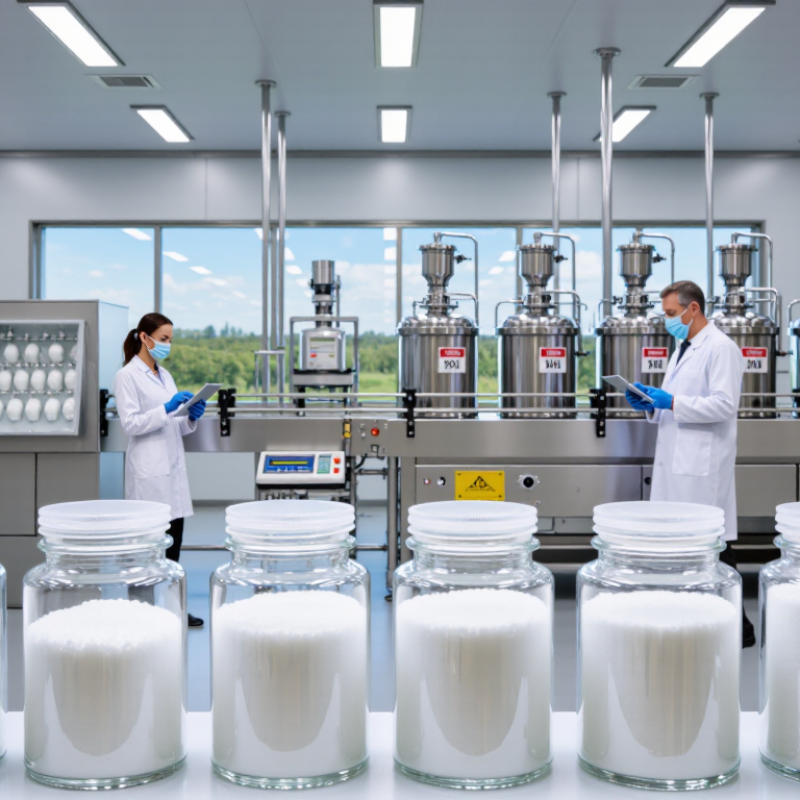
What Is Inositol Powder and Why Is It Manufactured in China?
Inositol powder is a fine, white ingredient often used in nutritional supplements and functional food formulations. It is a naturally occurring sugar alcohol found in fruits, beans, grains, and the human body. Unlike ordinary sugar, inositol mainly supports cellular signaling and membrane function. Its neutral taste and water solubility make it practical for powders, capsules, and drink mixes.
China manufactures inositol powder because it has established chemical production zones, trained technical teams, and strong raw-material supply networks. Large facilities can manage crystallization, drying, milling, and packaging under controlled conditions. Export ports also support efficient global distribution. However, manufacturing location alone does not prove quality. Reliable suppliers should provide batch records, specification sheets, contaminant testing, and traceable production information. Independent testing can confirm identity, purity, moisture, and microbiological safety. It is not magic.
Tips: Ask for a recent certificate of analysis, not a generic template. Check whether the stated test methods match recognized standards. Review packaging details carefully, especially lot numbers, storage instructions, and sealing quality. A clear supplier should explain how moisture and cross-contamination are controlled. Price matters, but an unusually low quotation deserves careful questions. In practical sourcing, communication is often overlooked. That weakness can create delays or incorrect specifications. I would also compare samples from multiple suppliers, because appearance alone cannot confirm consistency. A slightly imperfect sample may reveal a useful quality concern before a larger order.
China Top Inositol Powder Manufacturers and Suppliers - What Is Inositol Powder and Why Is It Manufactured in China?
| Data Dimension | Verified Product Information | Manufacturing and Purchasing Relevance |
|---|---|---|
| Product Identity | Inositol powder is a powdered form of inositol, most commonly myo-inositol. It is a naturally occurring carbocyclic sugar polyol found in plants, animals, and human tissues. | Suppliers should clearly identify the inositol isomer, grade, assay basis, and intended application before quotation or production. |
| Chemical Formula | C6H12O6 | The formula is the same as that of glucose, but inositol has a different cyclic structure and is classified as a sugar alcohol rather than a conventional sugar. |
| Molecular Weight | 180.16 g/mol for inositol. | Molecular weight is used for formulation calculations, analytical testing, and conversion between mass concentration and molar concentration. |
| CAS Number | 87-89-8 is commonly used for myo-inositol. | The CAS number helps purchasers distinguish the requested material during regulatory review, import documentation, and laboratory identification. |
| Typical Appearance | White to almost white crystalline powder. | Color, odor, particle size, and flowability should be stated in the product specification because appearance can vary with crystallization, milling, and packaging conditions. |
| Water Solubility | Inositol is soluble in water; solubility is affected by temperature, concentration, particle size, and test method. | Solubility data are important for powders used in beverages, sachets, tablets, capsules, and other water-dispersible formulations. |
| Common Commercial Forms | Fine powder, standard powder, granulated powder, and application-specific particle-size grades. | Particle-size selection can influence blending uniformity, dust control, dissolution rate, compressibility, and filling performance. |
| Typical Applications | Dietary supplements, nutrition powders, tablets, capsules, drink mixes, functional foods, and selected pharmaceutical or laboratory applications. | The required documentation and testing level depend on the final use. Food, supplement, pharmaceutical, and laboratory grades should not be treated as interchangeable without verification. |
| Core Production Stages | Raw-material preparation, aqueous processing or synthesis route, purification, crystallization, solid-liquid separation, drying, milling, sieving, and packaging. | Each stage can affect purity, moisture, crystal form, particle-size distribution, and microbial quality. A controlled process is essential for consistent batches. |
| Key Quality-Control Tests | Identification, assay, loss on drying or moisture, residue on ignition or ash, related substances, heavy metals or elemental impurities, microbial limits, and particle-size distribution where applicable. | Buyers should request a current certificate of analysis, test methods, specification limits, batch number, production date, and expiry or retest date. |
| Manufacturing in China | China has established chemical, food-ingredient, pharmaceutical-intermediate, packaging, and logistics infrastructure that can support large-scale powder production. | Manufacturing in China may provide access to integrated raw-material sourcing, process engineering, contract production, quality laboratories, and export logistics. Actual capability varies by facility and must be audited or documented. |
| Supply-Chain Advantages | Large production zones, domestic equipment suppliers, containerized export networks, and multiple packaging options are available in the Chinese ingredient sector. | These factors can support bulk orders, private specifications, customized packaging, and scheduled replenishment, subject to minimum order quantities and production capacity. |
| Documentation to Request | Specification sheet, certificate of analysis, safety data sheet, allergen statement, non-GMO statement where applicable, origin information, packaging details, and regulatory declarations. | Documentation should match the destination market and the intended product category. Additional certificates may be required for organic, halal, kosher, or pharmaceutical applications. |
| Packaging Considerations | Common bulk packaging includes lined bags, fiber drums, or other food- or pharmaceutical-compatible containers, depending on grade and order requirements. | Packaging should protect the powder from moisture, contamination, odor absorption, and physical damage during storage and international transportation. |
| Storage Conditions | Store tightly closed in a cool, dry, well-ventilated place and protect from moisture and contamination. Follow the supplier’s validated storage instructions. | Warehouse humidity, container integrity, lot rotation, and transport conditions can influence caking, flowability, and compliance with the stated shelf life. |
| Buyer Evaluation Criteria | Product identity, specification compliance, batch consistency, traceability, production controls, testing capability, packaging, lead time, and export documentation. | The lowest price should not be the only selection criterion. A qualified supplier should demonstrate repeatable quality and provide verifiable records for the specific material offered. |
Note: Product specifications, regulatory status, assay limits, shelf life, and certification availability may differ by grade, destination market, and supplier. Buyers should confirm current technical documentation before placing an order.