
How to Choose a Dental Implant Torque Wrench in 2026?

Choosing a Dental Implant Torque Wrench in 2026 is not simply a matter of buying the highest-range instrument. The wrench must match the implant system, driver connection, and torque values specified by its manufacturer. A stable handle, clear scale, and smooth release matter when the clinician is working in a restricted space, with gloves on and a small driver seated in the implant.

Evidence matters. International Team for Implantology (ITI) consensus publications treat primary stability as an important clinical factor, but do not establish one torque target for every implant and patient. Many protocols use values around 25–45 Ncm; anatomy, implant design, and treatment plan can change the appropriate setting. More torque is not automatically better. A systematic review should guide decisions, not replace the device instructions or clinical judgment.

A fair paraphrase of implant researcher Prof. Daniel Buser’s published emphasis is: “Primary stability matters; maximum torque alone does not guarantee success.” This is a paraphrase, not a verbatim quotation. It captures a useful caution. Small differences matter. Before choosing, check the wrench’s measurement range, calibration guidance, sterilization instructions, and compatibility with your system. Ask how calibration is verified, and how often. A wrench that feels precise may still need service. That deserves a second look. In this guide, we compare practical features and evidence so clinicians can choose a tool that supports controlled, repeatable placement—not just a reassuring number on the handle.
How to Choose a Dental Implant Torque Wrench in 2026?

What a Dental Implant Torque Wrench Does

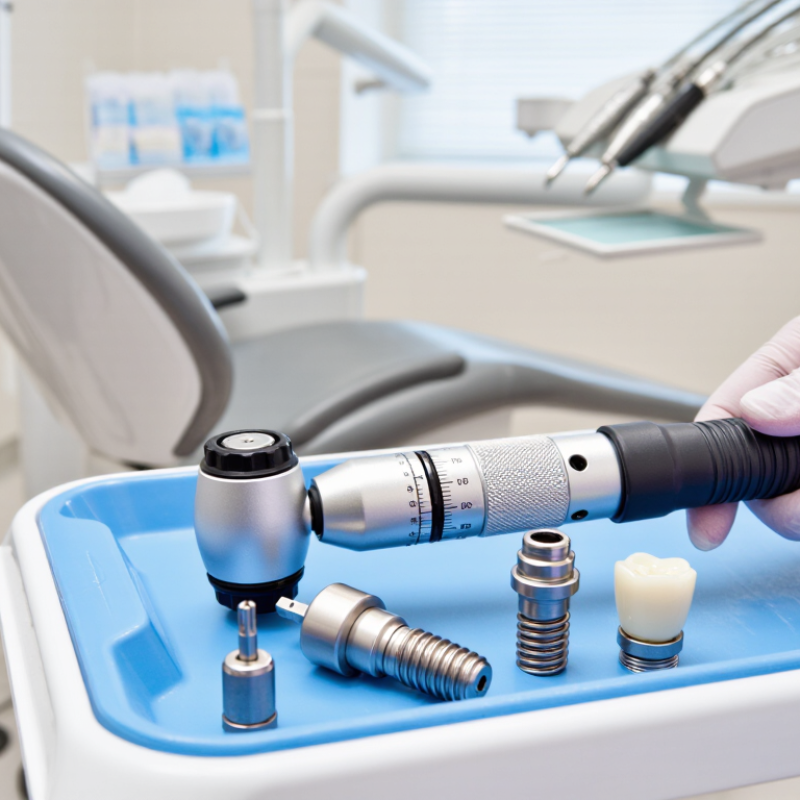
A dental implant torque wrench applies a measured turning force to an implant system. Depending on its design, it may help place an implant or tighten an abutment screw. The goal is controlled force, not simply a firm turn by hand. Too little torque can leave a connection unstable; too much may damage components or surrounding structures. The correct value depends on the specific component and clinical instructions.

Some wrenches use a preset setting and give a small click when the selected torque is reached. Others have a scale that the clinician reads while applying pressure. In a quiet operatory, that click can be easy to miss if the instrument is held at an awkward angle. Small detail, but it matters. The wrench should fit the connection, move smoothly, and be used according to its instructions. A clean, dry working area also helps the clinician maintain control.

Accuracy depends on more than the tool itself. Wear, repeated use, cleaning, and storage can affect performance, so calibration and inspection should follow the instrument’s guidance. A wrench is not a substitute for clinical judgment or the prescribed torque value. Even experienced clinicians can find that grip and access vary from one patient to another; that variation is worth noticing rather than ignoring.

How to Determine the Required Torque Range

How to Choose a Dental Implant Torque Wrench in 2026?
How to Determine the Required Torque Range

Choose the range from the procedure, not from the wrench’s maximum rating. Implant insertion torque and abutment-screw torque are different tasks. Published clinical studies commonly use insertion-torque thresholds around 25–45 Ncm for primary stability, but these are not universal targets. Bone density, implant design, and the treatment plan can change the required value. Bone matters. Check the implant system’s instructions for use and the clinician’s protocol before selecting a wrench.

For prosthetic screws, use the specified tightening value; it may be much lower than insertion torque. Select a tool whose working range includes that value comfortably, rather than placing it at the very bottom or top of its scale. A wrench marked 10–50 Ncm, for example, may suit varied tasks only when each task’s approved setting falls within its range. Do not guess. ISO 6789-2:2017 sets calibration and uncertainty requirements for hand torque tools, making calibration records relevant when assessing accuracy. Confirm the wrench’s calibration status, units, adjustment method, and cleaning instructions. A printed number alone is not proof of accuracy; worn mechanisms and rushed handling can still affect readings.

How to Choose a Dental Implant Torque Wrench in 2026? – How to Determine the Required Torque Range

Clinical task Representative torque range What determines the required value? Torque-wrench selection guidance
Implant insertion Often planned within approximately 25–45 N·cm; not a universal target Implant system instructions, surgical plan, bone conditions, and the clinician’s assessment of primary stability Use an instrument intended for implant insertion that covers the prescribed value. Do not treat a higher insertion torque as automatically better.
Abutment or prosthetic screw tightening Values commonly fall around 15–35 N·cm, but vary substantially by component The specific screw, abutment, implant connection, and current manufacturer instructions Choose a calibrated wrench that can accurately deliver the exact specified setting; never infer the value from another implant system.
Healing abutment placement Frequently hand-tightened; a single standard N·cm target does not apply to all systems Component design and the system-specific instructions for use (IFU) Confirm whether the component calls for hand tightening or a specified torque before selecting or using a wrench.
Final prosthesis or framework screw tightening Must be taken from the instructions for the exact prosthetic components Screw and component specifications, restoration design, and the prescribed tightening protocol Verify the required value for every screw type; do not assume all screws in a restoration share one torque setting.
Wrench operating range Select a range that includes the required setting The lowest and highest torques specified for the procedures and components the wrench will service Check the wrench’s stated range, scale resolution, compatible driver, and calibration requirements. Avoid a tool whose required setting falls outside its specified range.
Calibration and maintenance Follow the wrench manufacturer’s inspection and calibration schedule Instrument design, usage, sterilization instructions, and applicable quality procedures Use a maintained, verified instrument; inspect it for wear or damage and follow its cleaning, sterilization, storage, and calibration instructions.

Important: Torque figures above are representative guidance, not universal prescriptions. The current instructions for the exact implant and prosthetic components take precedence; confirm the required torque before treatment.

How to Compare Wrench Types and Drive Systems

How to Choose a Dental Implant Torque Wrench in 2026?

How to Compare Wrench Types and Drive Systems

Dental implant torque wrenches may be preset, adjustable, or beam-style. A preset model is simple to use, but offers less flexibility across procedures. Adjustable designs cover several torque settings; check that markings are easy to read under operatory lighting. Beam-style wrenches show force on a scale, though reading that scale while maintaining alignment can take practice. No type is automatically best. Follow the instrument and implant system instructions.

Drive systems matter just as much. A ratcheting head can help in a confined posterior area, while a fixed connection may feel more direct. Confirm that the wrench accepts the required driver interface, such as the compatible hex or square connection, and that the driver seats fully without wobble. Fit matters. A loose connection can affect handling and make torque application less predictable.

Check the stated torque range, cleaning and sterilization instructions, and calibration guidance before choosing. These details are easy to overlook. A clear scale is useful, but it does not replace routine inspection or correct technique. In practice, the most convenient wrench may not be the most suitable one for every case. I would compare how it feels with gloves on and how easily its parts can be checked after cleaning; that small trial can reveal an annoying mismatch. Follow the manufacturer’s instructions and clinical protocols for use.

How to Check Implant System Compatibility

How to Choose a Dental Implant Torque Wrench in 2026?

Compatibility starts with the exact implant connection, not the wrench’s appearance. Check the system documentation for the required driver interface and the specific screw or component being tightened. Similar-looking tips can have different shapes or engagement depths. A loose fit may damage the screw head or deliver uneven torque. Not just the socket.

Compare the wrench’s torque range and units with the value specified in the current instructions for use. Do not estimate a setting or assume a conversion. Check whether the wrench is intended for surgical placement or prosthetic tightening; these tasks may require different instruments. Small details matter. Confirm ratchet direction, any permitted adapter, and whether the instrument can undergo the clinic’s validated cleaning and sterilization process. A quick hand fit is not proof of compatibility. If documentation is unclear, pause and verify the part number and connection with the supplier or a qualified service technician. Calibration also deserves attention: a click can feel normal while the delivered torque has drifted. It is easy to focus on the number and miss the interface. That check should not be skipped.

How to Choose a Dental Implant Torque Wrench in 2026?

How to Check Implant System Compatibility

How to read this chart: These are example torque scale settings found across implant torque-wrench products, not clinical torque recommendations.

Before use, confirm that the wrench’s drive connection fits the specific implant system and driver, and check the system’s instructions for use for the required torque. Also verify the wrench’s measurement range, units, calibration status, and cleaning and sterilization instructions. A matching torque setting alone does not establish compatibility.

How to Assess Calibration, Materials, and Sterilization Needs

How to Choose a Dental Implant Torque Wrench in 2026?
How to Assess Calibration, Materials, and Sterilization Needs

When comparing dental implant torque wrenches in 2026, start with the torque range required by your implant system and clinical workflow. Check whether units are clearly marked and the scale is easy to read under operatory lighting. Calibration matters more than a polished case. Ask for calibration records, the recommended verification interval, and service instructions. A wrench may click normally yet deliver an inaccurate setting. Small differences count.

Tips: Confirm the wrench’s direction, range, and calibration status before use. Keep its record with maintenance logs. Check it regularly. If a reading seems inconsistent, remove it from service and arrange verification.

Inspect materials and construction next. Stainless steel handles repeated processing well, but joints and internal mechanisms may need special care. Confirm that the manufacturer’s instructions permit your clinic’s exact cleaning and sterilization cycle. Do not assume every wrench can be fully disassembled or autoclaved. Look for corrosion-resistant surfaces, legible markings, and a grip that remains secure with gloved hands. There is no perfect tool. A sturdy wrench can still be awkward to clean, and that detail is easy to miss during a quick purchase. Choose one your team can maintain consistently, not merely one that feels precise on day one.