What is a neuro surgical drill and how does it work?
In the intricate world of neurosurgery, the neuro surgical drill is a vital tool. Renowned neurosurgeon Dr. Emily Carter emphasizes its importance, stating, "The precision of a neuro surgical drill can be the difference between life and death." This powerful instrument is designed for delicate procedures, allowing surgeons to access the brain with remarkable accuracy.
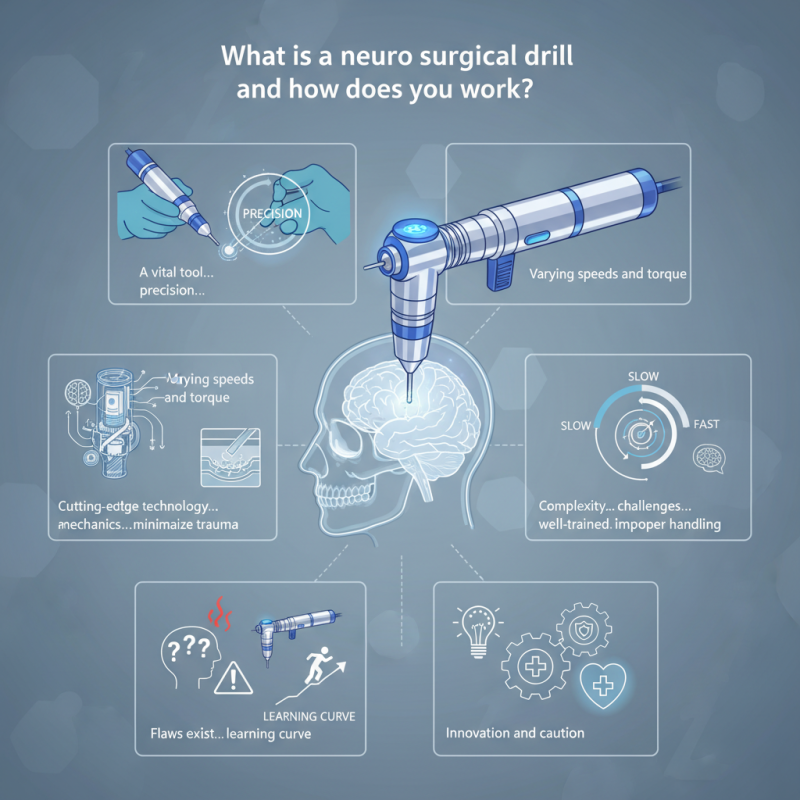
The neuro surgical drill operates using cutting-edge technology. It features advanced mechanics that minimize trauma to surrounding tissues. The drill can produce varying speeds and torque, making it versatile for different operations. However, its complexity can also pose challenges. Surgeons must be well-trained in its use, as improper handling may lead to complications.
Despite its advancements, flaws exist. Some drills may overheat during prolonged use, causing concern. Additionally, the learning curve can be steep for new practitioners. Understanding these limitations is crucial in optimizing the neuro surgical drill's efficiency while ensuring patient safety. The balance between innovation and caution in neurosurgery is essential.
Definition and Importance of a Neuro Surgical Drill
A neuro surgical drill is a specialized tool used in brain surgeries. Its precision is crucial for accessing the brain while minimizing damage to surrounding tissues. According to a report from Neurosurgical Review, the accuracy of a neuro surgical drill can significantly decrease complication rates in surgeries, with some studies showing reductions of up to 30%.
These drills work by using rotating blades at high speeds to create openings in the skull. The design is often ergonomic, catering to the intricate techniques required in neurosurgery. While modern drills come equipped with advanced features, such as depth controls and speed variations, the operator's skill remains a critical factor. Without proper training, even the best equipment can lead to unintended outcomes.
Brain surgeries require breaking through dense bone, which can become complicated. The drills also generate heat, which can harm the neural tissues if not managed properly. A recent analysis indicated that drill-related thermal injuries occur in about 5-10% of cases. This highlights the need for continual refinement of drilling techniques and equipment to enhance safety and efficiency in surgeries.
Components of a Neuro Surgical Drill
A neuro surgical drill is a specialized tool used in brain surgeries. Its primary components make it efficient for precision tasks. The most important parts include the drill bit, motor, and control system. Each part plays a critical role in the surgical process.
The drill bit is usually made of high-strength materials. It is designed to cut through bone with minimal damage to surrounding tissues. The motor powers the rotation of the bit. It needs to be precise, as any misalignment can lead to complications. The control system allows surgeons to adjust the speed and pressure. This customization is crucial during delicate procedures.
One area for improvement lies in the ergonomics of the drill. If it's uncomfortable to hold, it can affect the precision. Surgeons may experience fatigue during long operations. Also, maintenance of the drill is essential. A poorly maintained drill may not perform as expected. This can lead to extended surgery time and risk for patients.
Operating Mechanism of a Neuro Surgical Drill
A neuro surgical drill is a specialized tool used in brain surgery. Its operating mechanism is essential for precision. This drill typically operates using a rotary motion. Surgeons use it to create openings in the skull. The drill consists of a rotating bit attached to a motor. It allows for controlled drilling into hard tissue.
During surgery, the bit rotates at high speeds. This helps to efficiently cut through bone while minimizing damage to surrounding areas. Surgeons must apply appropriate pressure. Too much force can cause unwanted fractures or damage. Each drill is designed to reduce heat generation. This prevents overheating of the tissue.
As with any surgical tool, there are risks. Not every drill produces the same outcome. Some may struggle with specific bone densities. It requires the surgeon's skill to adjust their technique accordingly. Ongoing training is crucial to mastering the use of neuro surgical drills. This ensures patient safety and surgical success.
Common Types of Neuro Surgical Drills
Neuro surgical drills are vital tools in brain surgery. These drills come in various types, each designed for specific purposes. The most common types include high-speed drills and ultrasonic drills. High-speed drills, often used for craniotomies, can reach speeds of up to 60,000 RPM. This rapid rotation aids in precise bone cutting. However, the heat generated by such speeds poses risks to surrounding tissues.
Ultrasonic drills operate differently. They utilize ultrasonic vibrations to fragment bone while preserving soft tissues. Studies show that these drills can minimize damage to the dura mater, which is crucial for patient recovery. However, the learning curve for surgeons can be steep. Transitioning from traditional methods to ultrasonic techniques may require additional training.
Another type, the piezoelectric drill, combines features of both high-speed and ultrasonic drills. This technology focuses on providing better control and reduces thermal injury risks. Current data indicates a growing preference for piezoelectric drills among neurosurgeons, suggesting an 18% increase in usage over the past two years. Despite these advancements, not all surgical teams have access to these tools. Evaluating the limitations and benefits of each drill type is essential for optimal surgical outcomes.
Neuro Surgical Drill Types and Usage Frequencies
Applications of Neuro Surgical Drills in Neurosurgery
Neurosurgical drills are vital tools in modern neurosurgery. They are primarily used for craniotomies and drilling through the skull. According to a report by the World Health Organization, about 700,000 people in the U.S. undergo neurosurgical procedures annually. These drills help surgeons access the brain safely and precisely.
The applications of neurosurgical drills are vast and multifaceted. They are used in tumor resections, deep brain stimulator placements, and trauma surgeries. In a study published in the Journal of Neurosurgery, it was found that using advanced drill technology can reduce surgery time by 30%. This efficiency can lead to shorter recovery times for patients. However, there is always the risk of complications. Surgeons must maintain a delicate balance between speed and safety.
Moreover, not all drills are created equal. Some designs may not provide adequate control, resulting in unintended tissue damage. A 2022 review highlighted that improper use could lead to greater risks for the patient. Continuous training and evaluation are essential. As technology evolves, so must the skillset of the surgeons. The effectiveness of neurosurgical drills depends on both the tool and its operator.
What is a Neuro Surgical Drill and How Does it Work? - Applications of Neuro Surgical Drills in Neurosurgery
| Application Area | Drill Type | Functionality | Precision Level | Common Uses |
| Craniectomy | Electric Drill | Bone cutting and removal | High | Treating brain tumors |
| Neurosurgical Access | Pneumatic Drill | Rapid bone drilling | Medium | Access for biopsies |
| Skull Base Surgery | Ultrasonic Drill | Bone removal with minimal collateral damage | Very High | Tumor removal at the skull base |
| Spinal Surgery | Battery Operated Drill | Precision drilling in tight spaces | High | Laminectomy procedures |