Top Oximeter Suppliers for Global Buyers?
Choosing an Oximeter supplier is not simply a pricing exercise. It is a clinical and operational decision. Buyers must examine accuracy, consistency, documentation, and after-sales support. A low quotation can hide weak calibration services or unclear product specifications.
Dr. Takuo Aoyagi, widely recognized as the inventor of pulse oximetry, once reflected, “I was not thinking about inventing a pulse oximeter.” His experience shows how practical measurement problems can shape important medical technology. For global buyers, that lesson remains relevant. Reliable suppliers should explain sensor performance, measurement conditions, battery life, display readability, and quality-control procedures. They should also provide traceable test reports and clear instructions for different user environments.
Details matter.
A dependable supplier can describe how each Oximeter performs on a busy ward, in a home-care setting, or during shipment across humid climates. Buyers should verify manufacturing standards, regulatory documentation, warranty terms, replacement sensors, and technical response times. Independent product testing is valuable, but it should not replace professional judgment. No device performs perfectly in every situation. Motion, cold fingers, poor circulation, nail coatings, and incorrect placement may affect readings.
This guide compares leading Oximeter suppliers for global buyers. It considers product reliability, manufacturing experience, communication quality, delivery capability, and long-term service. Some supplier information may change over time, so buyers should confirm current certificates and specifications directly. That extra step feels inconvenient. It can prevent expensive mistakes and protect patient care.
Oximeter Types and Their Key Applications
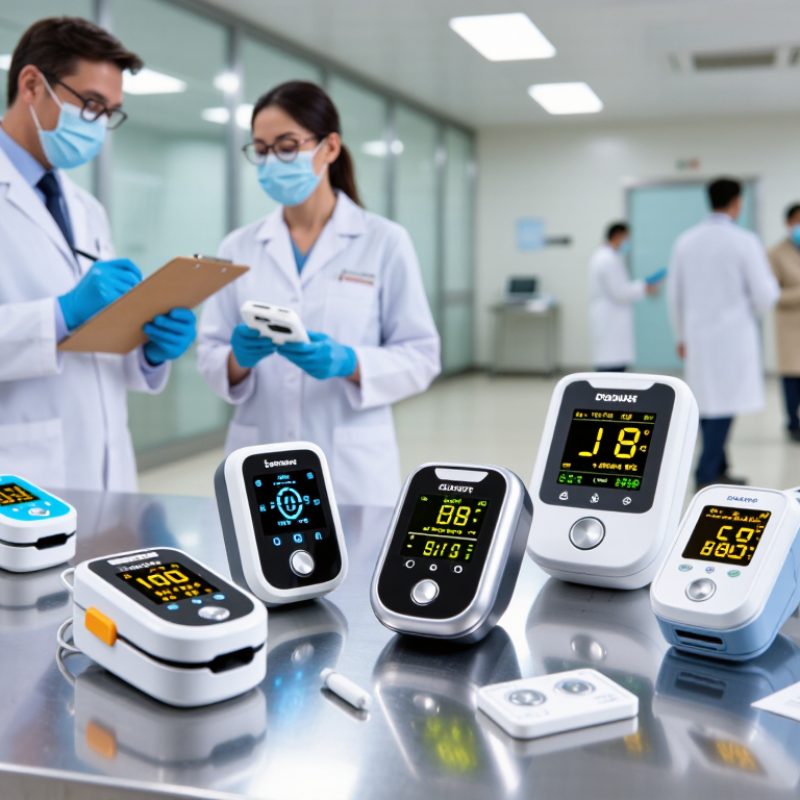
Oximeters differ by sensor design, portability, and clinical purpose. Fingertip models suit spot checks in homes, ambulances, and small clinics. Handheld units support repeated measurements during transport or bedside assessment. Tabletop systems usually connect with larger patient monitors in hospitals. Wearable oximeters can track overnight oxygen patterns, but motion and loose contact may distort readings. Grand View Research estimated the global pulse oximeter market at approximately US$2.8 billion in 2023, reflecting strong demand across hospital and home-care settings.
Clinical teams use oximeters to monitor respiratory illness, anesthesia recovery, sleep-related breathing problems, and high-altitude exposure. Neonatal care often requires smaller sensors and gentler attachment methods.
The FDA has warned that skin pigmentation, poor circulation, cold fingers, and movement can affect accuracy. That warning deserves attention. A single number should not replace symptoms, medical history, or professional judgment. Market reports may show growth, but they cannot guarantee performance in every patient or environment.
Tips: Choose the sensor for the application, not only the lowest price. Check regulatory documentation, calibration information, alarm functions, and supported patient types. Keep the hand warm and still during testing. Compare unusual results with clinical signs and repeat the measurement. I would also question unusually perfect readings; real-world data is rarely so clean.
Essential Criteria for Evaluating Global Oximeter Suppliers
Top Oximeter Suppliers for Global Buyers?
Global buyers should evaluate suppliers beyond price, packaging, and delivery promises. Start with evidence of accuracy, manufacturing controls, and post-market support. ISO 13485 certification shows a quality system, but it does not prove every model performs well. Certificates are not enough.
Ask for independent test reports covering low perfusion, motion, temperature changes, and different skin tones. In a 2020 New England Journal of Medicine study, occult hypoxemia occurred in 11.7% of Black patients, compared with 3.6% of White patients, when pulse oximeter readings appeared similar. The FDA’s 2021 safety communication also warned that skin pigmentation can affect readings. A responsible supplier should explain its validation population clearly. Vague claims deserve skepticism.
Request production samples before signing a large contract. Test them on cold fingers, moving hands, nail polish, and low-battery conditions. Compare readings with a calibrated reference device. Check probe durability, alarm behavior, battery life, labeling, and language support. WHO procurement guidance emphasizes accuracy, usability, and maintenance in real clinical settings. I would also inspect complaint-response times and replacement procedures. A low quoted price can become expensive when accessories fail. Some buyers still overvalue certificates and overlook field performance. That assumption is risky.
Essential Criteria for Evaluating Global Oximeter Suppliers
This buyer-oriented benchmark allocates 100 evaluation points across internationally recognized procurement priorities. Quality management should be verified against ISO 13485, device performance against ISO 80601-2-61, electrical safety against IEC 60601-1, and electromagnetic compatibility against IEC 60601-1-2. Buyers should also confirm regulatory documentation, clinical evidence, production capacity, and after-sales support before selecting a supplier.
Major Oximeter Supplier Regions and Market Specialties
North America remains a strong sourcing region for clinically oriented pulse oximeters. Suppliers there often emphasize hospital integration, reusable probes, and documentation for regulated procurement. Fortune Business Insights estimated the global pulse oximeter market at approximately USD 2.5 billion in 2024. Its forecast also indicates steady growth through 2032. Estimates differ across reports.
European suppliers commonly focus on conformity evidence, sustainability, and professional monitoring equipment. Buyers may find devices designed for neonatal care, ambulances, and outpatient clinics. The European market also values traceable technical files and clear performance testing. A practical check matters here: ask for accuracy results across different skin tones, motion levels, and oxygen ranges.
East Asia remains important for large-scale electronics production and component access. Suppliers in China, Japan, South Korea, and nearby manufacturing centers often offer compact fingertip units, rechargeable models, and high-volume customization. India and Southeast Asia are expanding assembly and distribution capabilities, especially for cost-sensitive healthcare systems. Grand View Research has projected continued global growth, with demand supported by home monitoring and remote care. Yet market projections can be optimistic. A lower price may hide weak sensor durability, unstable readings, or limited after-sales support. Buyers should compare sample performance, battery behavior, packaging quality, and calibration records before selecting a regional supplier.
Top Oximeter Suppliers for Global Buyers? - Major Oximeter Supplier Regions and Market Specialties
| Supplier Region | Common Product Focus | Typical Market Specialty | Common Compliance Frameworks | Advantages for Global Buyers | Key Due-Diligence Points |
|---|---|---|---|---|---|
| China | Fingertip pulse oximeters, handheld units, tabletop monitors, OEM and private-label products | High-volume consumer, home-care, and general clinical supply | ISO 13485 quality systems; applicable export-market medical-device requirements; China NMPA requirements for domestic sales | Broad manufacturing capacity, flexible product configurations, competitive unit economics, and established electronics supply chains | Verify actual regulatory status, sensor accuracy across skin tones, production consistency, software documentation, and factory audit results |
| United States | Hospital-grade spot-check devices, remote-monitoring equipment, and clinically oriented systems | Clinical use, telehealth, home monitoring, and technology-intensive healthcare applications | FDA medical-device requirements, applicable 510(k) pathways, ISO 13485, and electrical-safety standards where relevant | Strong emphasis on clinical evidence, usability, cybersecurity, connected-device integration, and post-market controls | Confirm intended-use claims, FDA status, clinical validation, alarm performance, data protection, and total landed cost |
| Germany and Western Europe | Professional patient monitors, hospital accessories, and precision-oriented monitoring equipment | European hospital procurement, professional healthcare, and quality-sensitive applications | EU Medical Device Regulation (MDR), CE marking through the applicable conformity route, ISO 13485, and relevant EN standards | Mature quality-management practices, detailed technical documentation, and strong alignment with European procurement expectations | Check MDR classification, notified-body documentation where required, post-market surveillance, and availability of replacement parts |
| Japan | Compact home-use monitors, precision medical devices, and elderly-care monitoring products | Home healthcare, aging-care services, pharmacies, and precision-focused clinical use | PMDA and Japanese medical-device regulations, applicable ISO 13485 systems, and relevant electrical-safety requirements | Strong reputation for compact design, manufacturing precision, user-focused engineering, and long-term product reliability | Assess Japanese-market authorization needs, language support, calibration procedures, service coverage, and export documentation |
| Taiwan | OEM/ODM pulse oximeters, connected monitoring devices, and electronics-integrated systems | Technology-enabled healthcare, private-label programs, and export-oriented medical electronics | ISO 13485, destination-market medical-device regulations, and applicable electromagnetic-compatibility requirements | Good integration of hardware, firmware, wireless connectivity, industrial design, and contract manufacturing | Review software life-cycle controls, wireless certification, cybersecurity, minimum order quantities, and ownership of design files |
| South Korea | Digital monitoring devices, compact clinical equipment, and connected home-health products | Smart healthcare, home monitoring, hospitals, and digitally connected medical applications | MFDS medical-device requirements, ISO 13485, and destination-market conformity requirements | Advanced electronics capabilities, compact product design, and experience with connected-device ecosystems | Validate app compatibility, cloud-data governance, language localization, regulatory claims, and long-term software support |
| India | Affordable fingertip devices, primary-care equipment, and products for domestic and emerging markets | Cost-sensitive healthcare, pharmacies, clinics, public-health programs, and developing-market distribution | India CDSCO requirements, ISO 13485 where applicable, and importing-country regulatory requirements | Growing medical-device manufacturing base, local-market knowledge, and potential cost advantages for selected product categories | Check component traceability, calibration records, export experience, after-sales infrastructure, and consistency between samples and production batches |
| Singapore | Regional distribution, regulated medical-device supply, and digitally enabled healthcare solutions | Southeast Asian procurement, regional logistics, healthcare technology, and compliance-led distribution | Singapore HSA requirements, ISO 13485, and applicable destination-market regulations | Efficient logistics, strong regulatory infrastructure, English-language business processes, and access to Southeast Asian markets | Distinguish distributor activities from manufacturing, confirm product registration responsibilities, and evaluate regional warranty support |
Buyer note: Regional strengths are general market patterns rather than guarantees for every supplier. Buyers should independently verify product authorization, ISO certification scope, clinical or analytical performance data, manufacturing controls, and after-sales support for the specific model.
Quality Standards, Certifications, and Product Verification
Top Oximeter Suppliers for Global Buyers?
Quality Standards, Certifications, and Product Verification
Reliable oximeter suppliers should provide clear evidence, not polished promises. Buyers should review ISO 13485 quality-management records and ISO 14971 risk-management procedures. Product files should reference relevant medical-device standards, including IEC 60601-1 and ISO 80601-2-61. Electromagnetic compatibility testing also matters in hospitals and ambulances.
Ask for current certificates, issuing bodies, validity dates, and covered product models. A certificate can be genuine but still exclude a newer model. Check the model number carefully. Small differences can hide important changes. Request test reports for SpO2 accuracy, pulse-rate accuracy, low-perfusion performance, and display stability. Tests should show conditions, sample sizes, and acceptance limits.
Practical verification should begin with production samples, not catalog photos. Inspect probe connectors, screen brightness, alarm behavior, battery contacts, and printed markings. Compare samples from different batches when possible. During trial use, record readings beside a calibrated reference device, while recognizing that the reference device also needs control. No supplier gets every detail right. Some documents may be incomplete, especially after design updates. That is not automatically disqualifying, but it deserves written clarification and corrective evidence. A dependable supplier responds with traceable records, realistic specifications, and consistent samples. Clearance in one market does not automatically authorize sale in another. Local registration, labeling, language, and post-market obligations still require independent review.
Procurement Steps for International Oximeter Buyers
International oximeter procurement should begin with the clinical purpose, not the lowest quotation. Define whether devices will serve hospitals, ambulances, home care, or screening points. Then specify accuracy, display visibility, battery life, probe size, perfusion performance, and intended patient groups. ISO 80601-2-61 provides relevant safety and performance requirements for pulse oximeter equipment. Treat it as a baseline, not a complete purchasing decision.
Request technical files, quality certificates, calibration records, and clear instructions for use. Check whether the supplier operates under a documented quality system, such as ISO 13485. The FDA has warned that skin pigmentation, poor circulation, motion, and cold fingers can affect readings. Ask for validation evidence across realistic conditions. A polished datasheet is not enough. Test samples with a defined acceptance checklist.
Compare total procurement cost, including freight, spare probes, batteries, training, warranty response, and import documentation. MarketsandMarkets has projected continued growth in the global pulse oximeter market, reflecting strong demand but also a crowded supplier field. That makes supplier verification essential. Check production capacity, inspection procedures, complaint handling, and delivery history. Use a small pilot order before committing to large volumes. I have seen buyers focus heavily on unit price and overlook replacement parts. That mistake becomes expensive quickly. Review performance after delivery, because procurement is not finished when cartons arrive.
Related Posts
-
Global Innovations in Pulse Ox Machines: What to Expect by 2025
-
How to Choose the Best Oximeter for Your Business?
-
2026 Top Pulse Ox Monitor Types Which One Is Best?
-
Revolutionizing Healthcare with Home Pulse Oximeters and Their Impact on Global Patient Monitoring
-
10 Best Pulse Oximeters for Accurate Readings?
-
Exploring Innovative Alternatives to the Best Pulse Ox Machine for Global Buyers