10 Best Syringe Pumps for Precise Fluid Delivery

Choosing the right syringe pump can determine whether a delicate experiment succeeds or produces unreliable results. The best systems deliver fluids at a controlled rate, even when the flow is only a few microliters per hour. This guide examines 10 Best Syringe Pumps for Precise Fluid Delivery, focusing on practical performance rather than impressive specifications alone.

Each model is assessed through important details, including flow-rate accuracy, repeatability, syringe compatibility, drive mechanism, display controls, alarms, and calibration support. A stable pump should move smoothly without visible pulsing or sudden starts. That matters when feeding a narrow microfluidic channel or dispensing a temperature-sensitive solution into a small vessel. Ease of setup also deserves attention. Clear menus, secure syringe holders, and accessible tubing connections can prevent avoidable mistakes.

Small details matter.

The comparison also considers documentation, warranty coverage, cleaning requirements, and manufacturer support. These factors often influence long-term reliability more than a low purchase price. However, no single pump is ideal for every application. A compact unit may suit field testing, while a programmable model may better support automated laboratory workflows. Some published performance claims can also depend on syringe size, fluid viscosity, tubing resistance, and environmental conditions. That limitation is easy to overlook. Readers should verify specifications against their own protocol and follow applicable laboratory safety requirements. This approach keeps the recommendations useful, transparent, and grounded in real operating conditions.
10 Best Syringe Pumps for Precise Fluid Delivery

What Is a Syringe Pump and How Does It Work?

10 Best Syringe Pumps for Precise Fluid Delivery

What Is a Syringe Pump and How Does It Work?

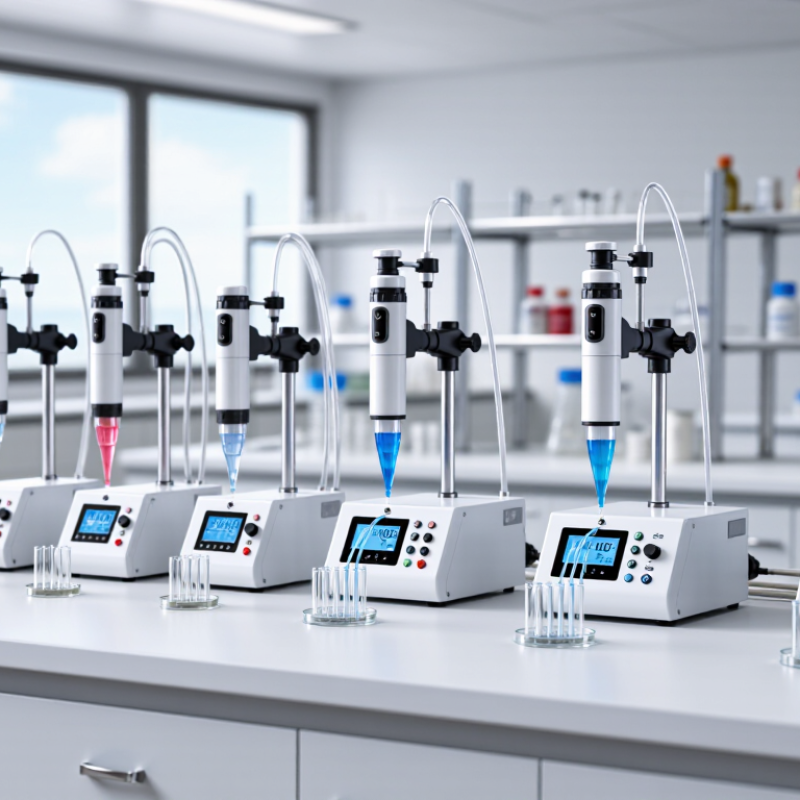
A syringe pump is a compact device that delivers small fluid volumes at a controlled rate. It uses a motor, lead screw, and sliding pusher to move a syringe plunger. As the motor turns, the pusher advances slowly and evenly. This action sends fluid through connected tubing, often in microliter or milliliter quantities.

The user enters a flow rate and target volume through the control panel. The pump then calculates the required plunger movement. Accurate performance depends on the syringe size, barrel fit, tubing, fluid thickness, and calibration. Even a slight mismatch can affect delivery. Small details matter.

Many syringe pumps include occlusion detection, completion alarms, and adjustable force settings. These features help identify blocked tubing, an empty syringe, or excessive resistance. In laboratory and clinical environments, trained personnel should confirm the setup before operation. Check the syringe clamp, tubing connections, and programmed values carefully.

A practical test uses distilled water and a measured collection vessel. Compare the delivered volume with the displayed value over a fixed period. This simple check can reveal drift, trapped air, or poor calibration. A pump may look precise on its screen but behave differently under load. That is an easy detail to overlook. Regular inspection and documented testing improve reliability, although no setup remains perfect under every condition.

Key Features for Precise Fluid Delivery

Precise fluid delivery begins with controllable flow, not a crowded control panel. The best syringe pumps offer fine rate resolution and stable delivery across low and high settings. A clear display should show flow rate, volume, syringe size, and remaining time. Operators need this information at a glance.

Accuracy also depends on mechanical design. Look for a rigid drive system, smooth plunger movement, and secure syringe clamps. These features reduce vibration and unwanted movement during long runs. Occlusion detection is essential, especially when tubing bends or resistance changes. Audible and visual alarms should identify stalled motion, empty syringes, and incorrect loading. Quiet operation matters in shared laboratories.

Compatibility deserves careful attention. A reliable pump should support common syringe sizes and allow easy calibration checks. Test it with the actual syringe and tubing, because performance can change between materials. I often run water through a measured collection vessel before using a new setup. Small bubbles can distort results. They are easy to miss. Data logging, password protection, and programmable limits improve traceability and reduce handling errors. Battery backup may protect a process during brief power interruptions, but it cannot replace supervision. No pump is perfect. Regular inspection, cleaning, and documented verification remain necessary. One overlooked detail is the mounting angle; an unstable stand can affect the whole delivery path.

10 Best Syringe Pumps for Precise Fluid Delivery - Key Features for Precise Fluid Delivery

Rank Syringe Pump Type Best Application Typical Syringe Volume Typical Flow-Rate Range Flow-Rate Resolution Typical Linear Accuracy Pressure Capability Control and Programming Important Safety Features
1 High-Precision Single-Channel Pump Analytical chemistry, calibration, microfluidics, and laboratory testing 1 µL to 60 mL Approximately 0.001 µL/min to 100 mL/min As low as 0.001 µL/min, depending on syringe and drive configuration Typically better than ±0.5% of delivered volume Usually up to approximately 100–200 psi with compatible syringes and fittings Infusion, withdrawal, timed volume, continuous flow, and programmable dispense sequences Occlusion detection, end-of-travel protection, syringe-size selection, and alarm output
2 Dual-Channel Independent Pump Two-fluid delivery, reagent addition, mixing, and comparative experiments 1 µL to 60 mL per channel Approximately 0.001 µL/min to 100 mL/min per channel Typically 0.001–0.01 µL/min at the low end Typically within ±0.5% to ±1% of delivered volume Generally up to approximately 100–200 psi, subject to syringe and tubing selection Independent or synchronized channel control, stored programs, and trigger-based operation Separate occlusion monitoring, overload protection, end-of-syringe alerts, and pause functions
3 Multi-Channel Syringe Pump Parallel assays, cell culture dosing, screening, and automated liquid handling 10 µL to 50 mL per channel Approximately 0.01 µL/min to 50 mL/min per channel Commonly 0.01 µL/min or better, depending on channel count Typically within ±1% of delivered volume Often up to approximately 50–100 psi Simultaneous, sequential, or individually programmed channel operation Channel-level fault reporting, overpressure protection, automatic stop, and emergency stop
4 Ultra-Low-Flow Microfluidic Pump Microfluidic chips, droplet generation, electrochemical testing, and sensor development 0.5 µL to 10 mL Approximately 0.0001 µL/min to 10 mL/min Down to approximately 0.0001 µL/min with suitable hardware Typically within ±0.5% to ±1% of delivered volume Commonly up to approximately 50–100 psi Fine rate adjustment, ramping, pulsed delivery, and computer-controlled operation Low-flow stability monitoring, pressure alarms, leak prevention, and controlled acceleration
5 High-Pressure Syringe Pump High-pressure chromatography, supercritical-fluid work, and demanding research systems 50 µL to 100 mL Approximately 0.01 µL/min to 50 mL/min Typically 0.001–0.01 µL/min Typically within ±0.5% of delivered volume Often rated from approximately 500 psi to more than 1,000 psi Constant-flow, constant-pressure, gradient, and externally triggered modes Pressure transducer, configurable pressure limit, automatic shutdown, and over-temperature protection
6 Infusion-Grade Syringe Pump Controlled medication delivery, veterinary applications, and medical-device testing 5 µL to 60 mL Approximately 0.01 mL/h to 1,500 mL/h Often 0.1–1 mL/h, depending on syringe size and operating mode Typically within ±2% of programmed delivery rate Generally lower than laboratory high-pressure pumps; commonly up to approximately 30 psi Rate, volume, time, bolus, dose limit, and drug-library functions on advanced systems Occlusion alarm, empty-syringe alarm, anti-bolus function, battery alarm, and door protection
7 OEM Embedded Syringe Pump Analytical instruments, diagnostic equipment, portable systems, and automated platforms 1 µL to 50 mL Approximately 0.001 µL/min to 100 mL/min Typically programmable through a motor controller or host instrument Commonly within ±1% of delivered volume after system calibration Usually approximately 30–100 psi, depending on the drive and fluid path Serial, USB, CAN, or digital I/O control; custom sequencing through host software Position feedback, limit switches, current monitoring, fault outputs, and configurable shutdown
8 Programmable Laboratory Pump General-purpose research, titration, reagent dispensing, and process development 10 µL to 140 mL Approximately 0.01 µL/min to 200 mL/min Typically 0.01–0.1 µL/min Typically within ±1% of delivered volume Usually up to approximately 50–150 psi Touchscreen or keypad programming, multi-step protocols, loops, ramps, and saved methods Occlusion detection, flow interruption, travel limits, password protection, and event logging
9 Portable Battery-Powered Syringe Pump Field sampling, mobile testing, environmental monitoring, and portable instrumentation 10 µL to 60 mL Approximately 0.01 µL/min to 100 mL/min Typically 0.01–0.1 µL/min Typically within ±1% to ±2% of delivered volume Commonly up to approximately 30–100 psi Local keypad or touchscreen control, USB communication, timed delivery, and stored programs Battery-status warning, low-power shutdown, occlusion alarm, end-of-stroke detection, and protective enclosure
10 Large-Volume Industrial Syringe Pump Coating, dosing, material testing, pilot production, and extended continuous operation 20 mL to 1,000 mL or more Approximately 0.1 mL/min to 1,000 mL/min Typically 0.1–1 mL/min Typically within ±1% to ±2% of delivered volume Often approximately 30–150 psi, depending on syringe diameter and fluid viscosity Continuous dispensing, batch dosing, external PLC control, and recipe-based operation Motor overload protection, pressure monitoring, emergency stop, end-of-stroke sensing, and leak detection

Note: Performance values are representative specification ranges for each syringe-pump category. Actual flow rate, accuracy, pressure rating, and usable syringe volume depend on the drive mechanism, syringe dimensions, fluid viscosity, tubing, fittings, calibration, and operating conditions.

How to Evaluate and Compare the 10 Best Syringe Pumps

Evaluating the 10 best syringe pumps requires more than comparing price or display size. Measure flow accuracy at low rates, where small errors become significant. Check the stated range, minimum increment, occlusion pressure, alarm delay, and bolus control. IEC 60601-2-24 provides safety and performance requirements for infusion equipment. Use it as a reference, not as proof of identical performance. The FDA’s infusion-pump safety guidance also stresses alarms, usability, and risk controls.

Create a simple test matrix. Run each pump with the same syringe, fluid, tubing, rate, and temperature. Record start-up delay and delivered volume over several hours. Grand View Research’s 2024 report forecasts strong growth in the global infusion-pump market through 2030, showing why selection discipline matters.

Yet market growth does not guarantee laboratory reliability. Battery duration, cleaning access, data logging, and syringe recognition deserve equal attention. A quiet motor may still hide inconsistent delivery. That is easy to miss.

Tips: Test at your real operating rate. Compare at least three syringe sizes. Review calibration records and service intervals. Ask whether alarms remain clear in a noisy room. Keep raw measurements, not only brochure claims. I would also repeat the test after cleaning, because performance can change. That extra check feels inconvenient. It often reveals the most useful weakness.

Best Syringe Pumps for Different Laboratory and Medical Uses

10 Best Syringe Pumps for Precise Fluid Delivery

The best syringe pumps depend on the application, not just advertised accuracy. In medical settings, choose models with occlusion detection, anti-bolus control, secure syringe clamps, and clear alarm history. The World Health Organization estimates that medication errors cost approximately US$42 billion globally each year, so reliable flow control is a safety issue, not a convenience. For neonatal and critical-care work, low-flow stability matters most. A slight delay can change the delivered dose.

Laboratories need different strengths. A pump for microfluidics should offer fine step resolution, low pulsation, programmable flow ramps, and compatibility with several syringe sizes. For cell culture or analytical testing, chemical resistance and easy cleaning are equally important. Grand View Research reported that the global infusion pump market was valued at over US$10 billion in 2023, reflecting strong demand for controlled fluid delivery. However, market growth does not guarantee better performance. Real-world testing still matters. I would compare flow accuracy at the intended rate, because a pump that performs well at 10 mL per hour may behave differently at 0.01 mL per hour.

Tips: Verify calibration before critical runs. Use the correct syringe diameter. Record occlusion tests and refill intervals. Check tubing compliance, too. It is often overlooked. When selecting among the ten options, test alarms with water first, then validate performance using the actual fluid and operating temperature.

10 Best Syringe Pumps for Precise Fluid Delivery

Representative flow-rate setpoints for different laboratory and medical applications

The chart compares representative operating setpoints in milliliters per hour (mL/h). Actual requirements vary with syringe size, fluid viscosity, tubing resistance, dosing protocol, and the required precision. Lower-flow applications generally require finer resolution and stronger back-pressure control.

Safety, Maintenance, and Calibration Guidelines

In a syringe pump, precision begins with setup, not the display. Select a syringe size that matches the target volume and expected flow rate. Confirm compatibility between the syringe, tubing, fittings, and fluid. Small leaks can create large delivery errors. Keep the pump on a stable, level surface. Before each run, inspect the barrel for cracks and the plunger for smooth movement. I have found that clean, dry connections prevent many mysterious interruptions. Maybe not always. Tubing flexibility, air bubbles, and temperature changes can still affect delivery.

Tips: Prime the line slowly and remove visible air. Use a waste container during priming. Record the syringe type, inner diameter, flow setting, operator, and date. This simple log supports traceability. Clean external surfaces with a compatible method, following the pump’s service instructions. Never force a sticky plunger. Stop and investigate. Replace worn tubing before it becomes brittle or cloudy. Calibration should use a verified balance or volume standard. Test at the actual flow rate, not only a convenient setting. Take multiple measurements and compare the average with the accepted tolerance.

For critical work, calibrate after relocation, repair, unusual vibration, or extended storage. Keep reference instruments within their valid calibration period. A second person should review calculations when practical. This is where practice exposes weaknesses. A pump may appear accurate while delivering inconsistent drops. Document deviations honestly, including failed tests and corrective actions. Reliable records improve future maintenance, even when the original setup seemed perfect.