

Top Oxygen Saturation Monitor Manufacturers in China
Choosing an Oxygen Saturation Monitor manufacturer in China takes more than comparing prices or product photos. Buyers need to examine measurement performance, sensor options, production consistency, and after-sales support. A clean display is reassuring. It is not proof of accuracy.
Dr. John W. Severinghaus, a pioneer in blood-gas measurement and oximetry, offers a useful perspective through his work. The following is a paraphrase, not a verified direct quotation: “A reading is meaningful only when the signal and the patient’s condition are considered together.” That distinction matters when comparing fingertip monitors, handheld units, and bedside systems. Motion, poor circulation, skin characteristics, and device design can affect readings. Numbers can mislead.
This overview looks at Chinese manufacturers through practical questions: What monitoring formats do they produce? Can they explain testing methods and provide clear technical documentation? Do they support customization without obscuring the device’s intended use? Buyers should also assess production capacity, quality controls, warranty terms, and communication during sample evaluation. Details matter. A low quotation may omit important service or validation costs, while polished marketing may leave ordinary questions unanswered. That deserves a second look.
China’s market includes manufacturers with different specializations and levels of experience. No single company is automatically right for every hospital, distributor, or home-care brand. The profiles that follow are intended as a starting point, not a substitute for independent verification. Compare specifications carefully, request current documentation, and test representative samples under realistic conditions before making a purchasing decision.
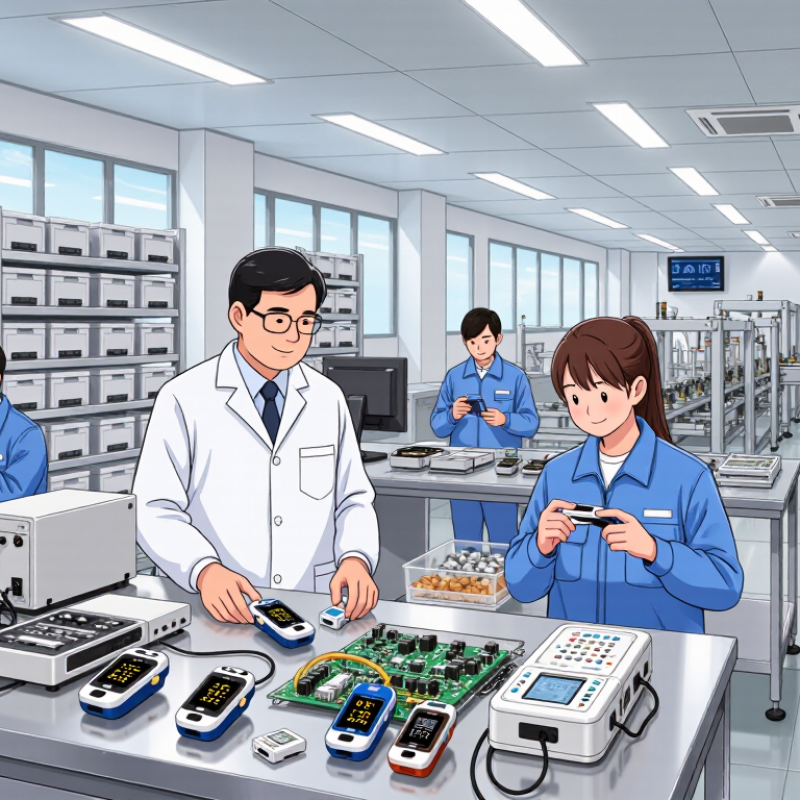
How Oxygen Saturation Monitors Work and Where They Are Used
Oxygen saturation monitors, often called pulse oximeters, estimate how much oxygen the blood carries. A sensor sends red and infrared light through a fingertip or earlobe. Oxygen-rich and oxygen-poor blood absorb these wavelengths differently. The device analyzes the changing light signal and displays an SpO₂ estimate alongside pulse rate. The number can look precise. It is still an estimate.
Clinicians use these monitors in hospitals, clinics, and some home-care settings to follow oxygen levels over time. They may also help assess people with breathing or heart conditions. A single reading cannot explain why oxygen is low or replace medical assessment. Movement, cold fingers, poor circulation, and some nail coatings can affect results. Skin pigmentation may also influence accuracy in certain devices. That limitation deserves attention, not a footnote. A trend, symptoms, and professional advice matter more than one isolated number.
Tips: Sit still and warm your hand before measuring. Remove dark nail polish if possible, and wait for the display to settle. If a reading seems unusual, repeat it and check for symptoms. Don’t delay urgent care because a monitor shows a reassuring value.
| Monitor Category | How It Works | Common Uses | Key Design and Manufacturing Considerations | Important Limitations |
|---|---|---|---|---|
| Fingertip spot-check monitor | Typically shines red and near-infrared light through a finger. A sensor measures changes in light absorption caused by the pulse to estimate peripheral oxygen saturation (SpO₂) and pulse rate. | Quick spot checks in clinics and at home, when a suitable device has been selected for the user. | Check display readability, fit, signal-quality indicators, battery operation, and that the device’s intended use and validation are clearly stated. | Movement, cold hands, poor circulation, and some nail products can affect readings. A single reading may not represent a person’s overall condition. |
| Handheld monitor with a separate sensor | Uses pulse-oximetry light emitters and a detector in a probe connected to a handheld display. The probe may be designed for a particular measurement site. | Clinical checks, home care, and situations where a separate display and sensor are useful. | Verify that the probe is compatible with the monitor and appropriate for the intended patient group and measurement site. Review cable durability, cleaning instructions, and sensor availability. | Readings can be unreliable if the probe is incorrectly positioned, poorly fitted, or used on a site not supported by the device. |
| Bedside continuous monitor | Measures the changing optical signal over time and displays SpO₂ and pulse rate continuously. Many models provide configurable alarms. | Continuous observation in settings such as hospital wards, recovery areas, and other monitored-care environments. | Assess alarm configuration, signal-quality display, sensor options, data handling, and performance during the intended clinical use. Manufacturing quality checks commonly include optical, electrical, and functional testing. | Motion and low peripheral perfusion may affect signal quality. An alarm or displayed value should be interpreted alongside the patient’s condition and other clinical information. |
| Wearable or overnight monitor | Some designs use red and near-infrared light in a reflectance arrangement, with the light source and detector on the same side of the measurement site. The device records readings over time. | Trend monitoring or overnight recording when the specific device is intended and validated for that purpose. | Check fit, comfort, recording duration, data export, sensor placement, and whether the device’s intended use includes overnight monitoring. | Wearable readings can be affected by movement, fit, and skin contact. Consumer wellness measurements are not necessarily a substitute for a clinically validated medical device. |
| Dedicated pediatric or neonatal system | Uses pulse-oximetry sensing with a sensor designed for the intended age group and measurement site; sensor design varies by device. | Monitoring children or newborns when the monitor and sensor are specifically intended for that population. | Confirm age or weight range, approved sensor site, attachment method, and validation for the intended patient group. Check that instructions address safe sensor placement and use. | Adult sensors should not be assumed suitable for children or newborns. Follow the device instructions and clinical guidance for the specific patient group. |
| Core measurement facts | Pulse oximeters estimate SpO₂ non-invasively from light absorption in pulsating blood. They do not directly measure arterial oxygen pressure (PaO₂); that requires a blood sample and laboratory analysis. | Useful for assessing oxygenation trends and supporting clinical observation, depending on the device and intended use. | When evaluating a manufacturer or product, review intended-use documentation, clinical validation, sensor compatibility, quality controls, and regulatory approvals applicable to the destination market. | SpO₂ readings may differ from blood-gas results and can be affected by motion, circulation, skin temperature, and other factors. Interpret results in context; seek clinical advice for concerning symptoms or readings. |
Related Posts
-
Top Oximeter Suppliers for Global Buyers?
-
2026 Top Pulse Ox Monitor Types Which One Is Best?
-
What Is a Pulse Ox Monitor and How Does It Work?
-
10 Best Pulse Oximeters for Accurate Readings?
-
Global Innovations in Pulse Ox Machines: What to Expect by 2025
-
How to Choose the Best Oximeter for Your Business?